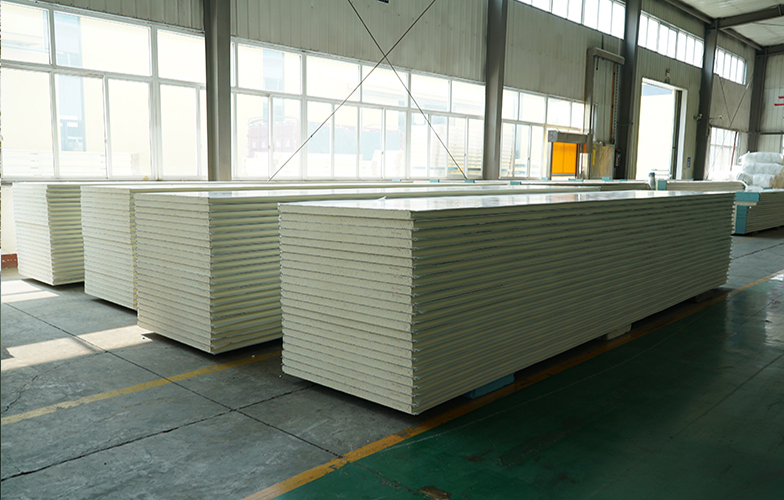
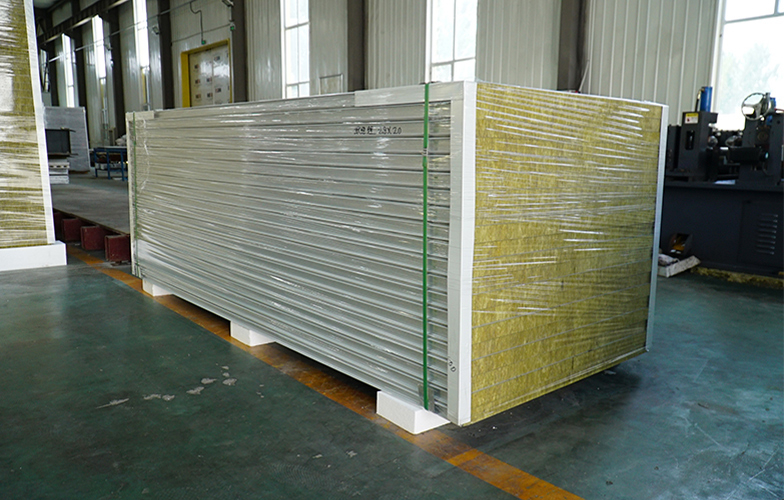
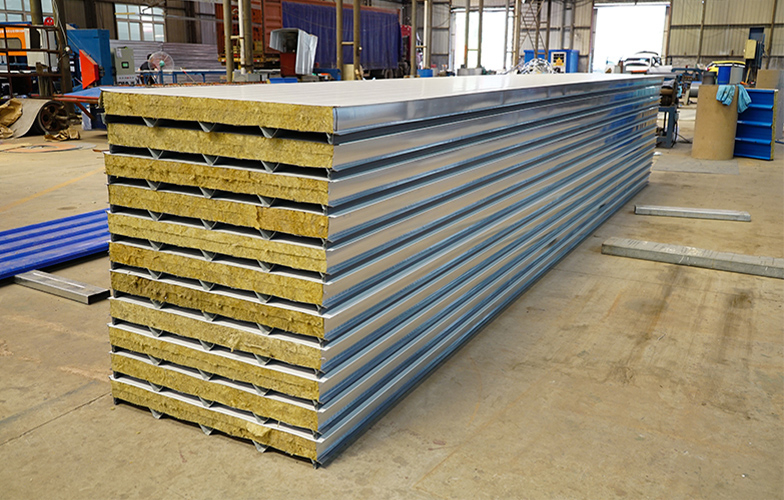
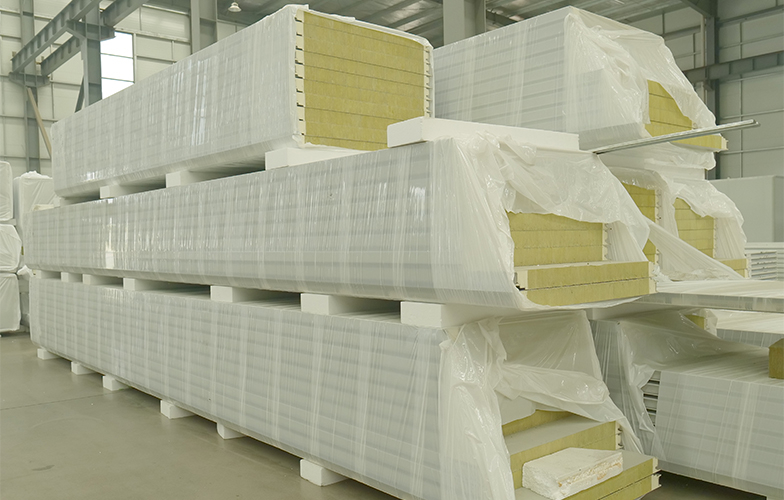
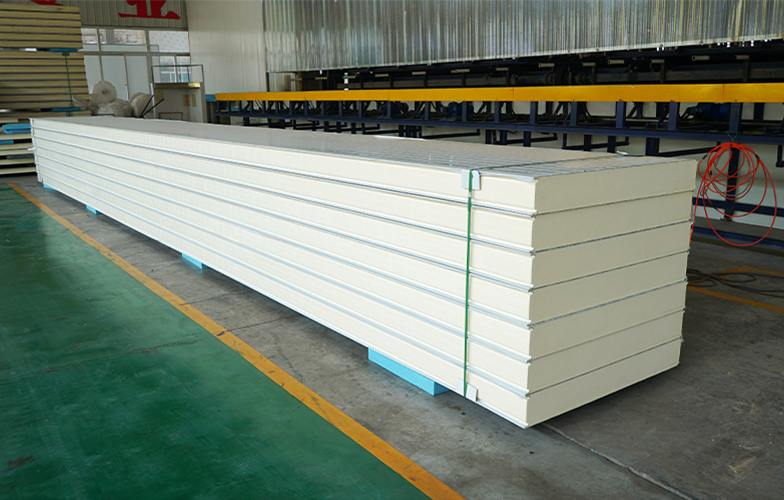
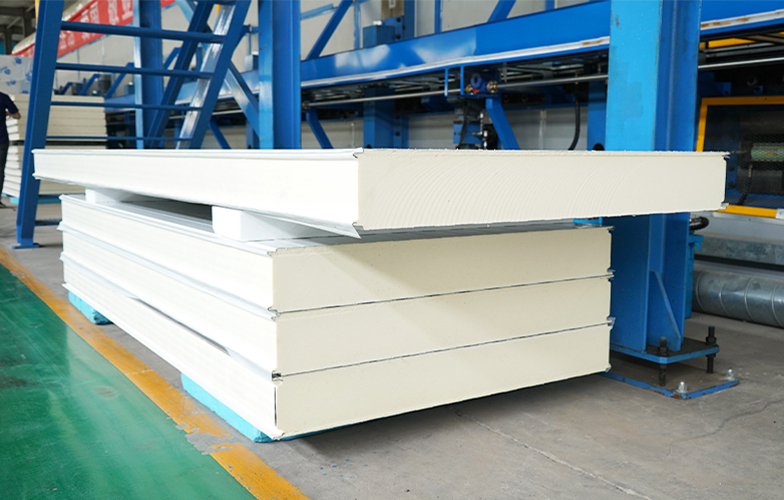

How To Make rock wool panels
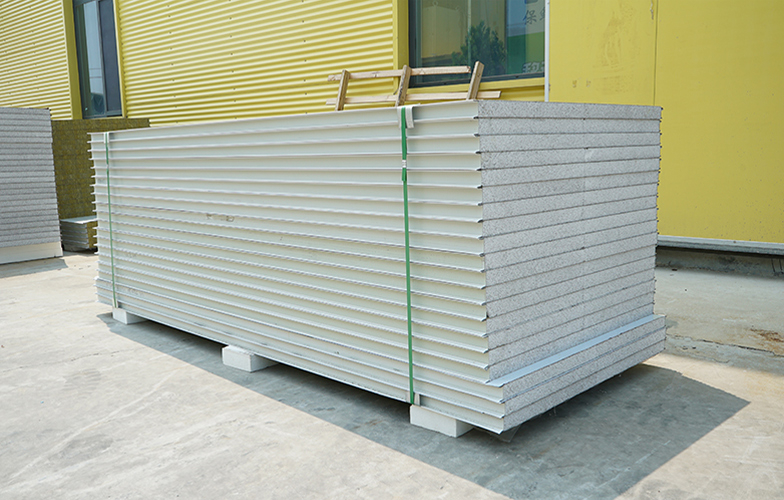
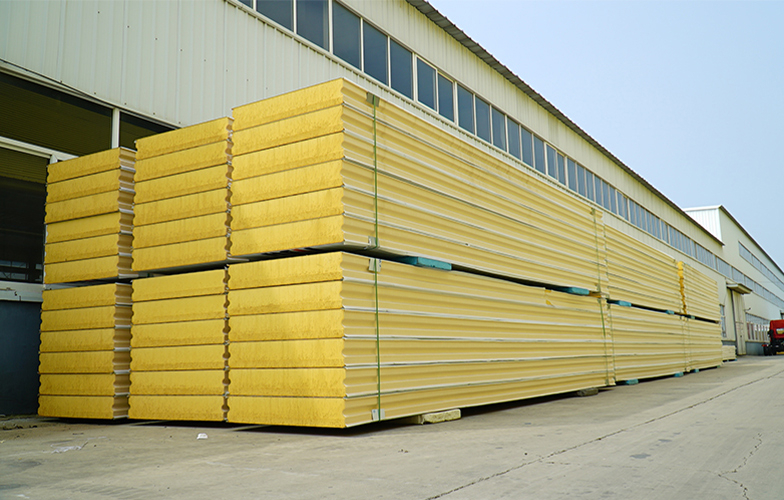
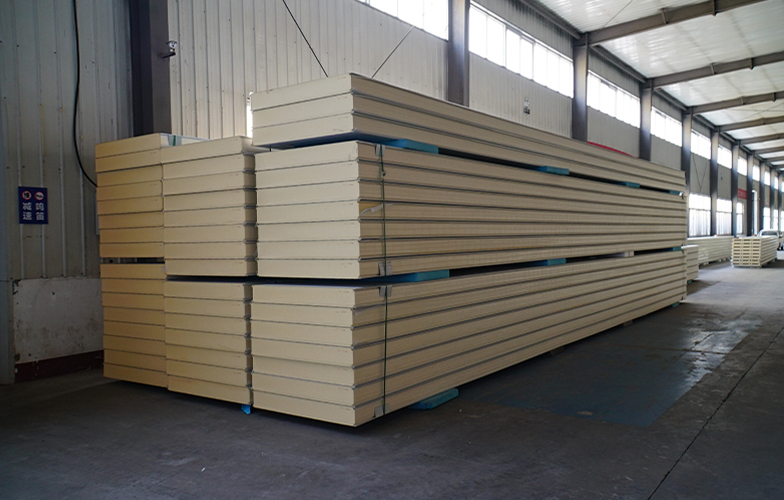
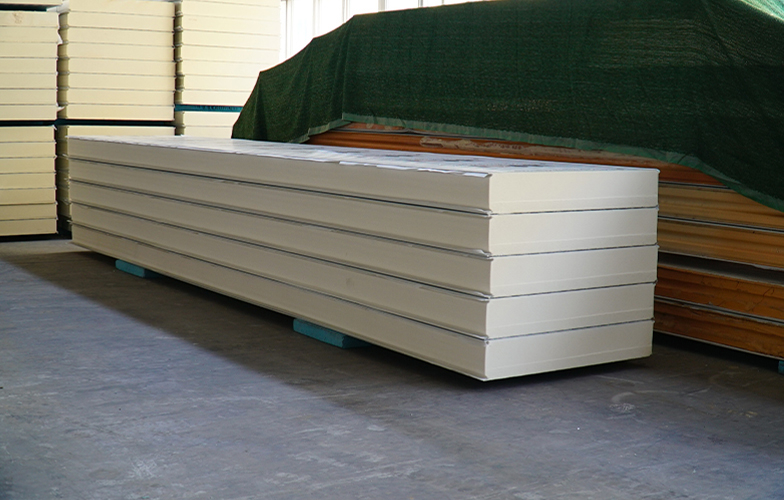
Rock wool panels are made by turning mineral raw materials such as basalt and other compatible minerals into fine stone fibers, forming those fibers into rigid insulation slabs, and bonding the slabs between metal facings. For a rock wool sandwich panel, the process has two connected stages: first, manufacturers produce and cure the rock wool core; second, they laminate the core to profiled steel sheets, form the joints, cut the panels to length and inspect the finished assembly.
The result is a prefabricated wall or roof panel with a mineral wool core, good thermal insulation, strong acoustic performance and a non-combustible core. However, the fire rating belongs to the tested panel assembly—not simply to the word “rock wool” on a quotation.
This guide explains how rock wool panels are manufactured, why fiber direction and density matter, how quality is checked, and what buyers should request from a supplier such as SHANGHE before placing a project order.
The Short Answer
A typical rock wool sandwich panel manufacturing process includes these steps:
Select and proportion mineral raw materials.
Melt the mineral mix in a high-temperature furnace.
Fiberize the molten material into fine mineral fibers.
Apply binder and water-repellent additives where required.
Form, orient and cure the fibers into rigid rock wool slabs.
Cut or arrange the slabs to the required panel width and thickness.
Prepare the steel coils and form the panel profiles.
Apply adhesive and place the rock wool core between the facings.
Press, laminate and cure the composite panel.
Cut to length, inspect, package and prepare for installation.
The exact machinery, binder formulation, density, panel profile and production speed vary by factory and product type. A credible supplier should be able to explain which steps are continuous, which are batch-based, and which test documents apply to the finished panel.
Step 1: Selecting and Preparing the Raw Materials
Rock wool begins with mineral raw materials. Basalt is a common primary material because it provides the mineral composition needed to form stable fibers at high temperature. Depending on the production recipe, manufacturers may also use dolomite, other suitable minerals and selected recycled mineral material.
Before melting, the ingredients are weighed and mixed according to the target fiber properties. The recipe affects:
Fiber diameter and fiber length
Melting behaviour and energy consumption
Core density and resilience
Thermal conductivity
Temperature resistance
Binder demand and final mechanical strength
Raw material selection is not the only quality factor. Consistent batching is equally important. Variations in the mineral mix can influence the fiber structure, while poor storage can introduce moisture or contamination into the process.
Step 2: Melting the Mineral Mix
The prepared mineral mix is fed into a furnace, where it is heated until it becomes a molten mineral melt. Industrial stone wool production uses very high temperatures; the exact temperature depends on the furnace design and raw material recipe.
At this stage, the manufacturer controls:
Furnace temperature stability
Melt viscosity
Feed rate
Energy input
Slag or unmelted particle content
A stable melt is essential. If the melt is too viscous, fibers may be uneven or contain unfiberized particles. If the process is not controlled, the resulting wool can vary in density, resilience and thermal performance.
Step 3: Fiberizing the Molten Material
The molten mineral is converted into fibers through a spinning or fiberizing system. The melt is drawn into fine strands, creating a wool-like structure with many air spaces.
These air spaces reduce heat transfer, while the mineral composition gives the material its high-temperature resistance. Fiberizing equipment and process control influence the uniformity of the fiber network. For a sandwich panel core, uniformity matters because the core must provide both insulation and support to the steel facings.
The fiberizing stage is also where manufacturers manage the balance between:
Fine fibers for thermal and acoustic performance
Sufficient fiber length for mechanical integrity
Low unfiberized content
Consistent distribution across the production width
Step 4: Adding Binder and Water-Repellent Treatment
Freshly formed mineral fibers are collected into a loose mat. A small amount of binder is commonly used to help the fibers hold together after curing. Depending on the product design, the core may also receive a water-repellent treatment.
The binder system must be controlled carefully. Too little binder can reduce slab integrity; too much organic binder can affect smoke, fire classification and emissions. This is one reason why a fire classification should be linked to the exact product and panel assembly rather than assumed from the core material name alone.
For buyers, useful questions include:
What is the declared core density?
What is the declared thermal conductivity?
Is the core hydrophobic or water-repellent?
Which test report covers the binder-containing product?
Does the fire classification cover the core only or the complete finished panel?
Step 5: Forming and Curing the Rock Wool Slab
The loose fiber mat is formed to a controlled thickness and density, then passed through a curing oven. Heat activates the binder and locks the fibers into a stable insulation slab.
The curing process affects:
Thickness tolerance
Density distribution
Compression strength
Tensile strength perpendicular to the facings
Dimensional stability
Bonding performance during panel lamination
For sandwich panels, the core must remain stable when it is cut, handled, bonded and compressed. A slab that looks acceptable visually may still fail if its density is uneven or its tensile strength is insufficient for the intended panel system.
Step 6: Cutting and Orienting the Core for Sandwich Panels
Once the rock wool slab has been cured, it is cut into strips or boards to match the panel production width. For many structural sandwich-panel designs, the core pieces are arranged so that the main fibers run perpendicular to the metal facings. This arrangement—often called a lamella or lamellar orientation—helps improve the core’s tensile performance between the facings.
This step is important because rock wool is fibrous and directional. The way the core is cut and oriented can affect:
Bond strength between core and steel
Tensile strength across the panel
Resistance to delamination
Panel handling stability
Structural behaviour under wind or other loads
A supplier should therefore specify not only “rock wool core,” but also the core density, orientation, thickness tolerance and relevant mechanical properties.
Step 7: Preparing the Steel Facings
While the core is being prepared, the metal facings are processed from steel coils. The steel is typically galvanized or coated with a corrosion-protection and finish system selected for the project environment.
The steel-facing process commonly includes:
Uncoiling the sheet
Cleaning or preparing the surface where required
Applying protective film or production protection
Roll-forming the wall or roof profile
Creating the edge geometry and joint profile
Checking width, flatness and coating condition
The facing thickness, coating type, profile and joint geometry affect weather resistance, load capacity, appearance and fire-test performance. A fire-rated panel should not be specified using only a core certificate if the tested assembly used a different facing gauge or coating system.
Step 8: Applying Adhesive and Placing the Core
The profiled metal facings are positioned on the production line, and adhesive is applied according to the panel design. The prepared rock wool core is then placed between the facings.
The adhesive must cover the required bonding area without leaving large voids or excessive pools. Poor adhesive distribution can cause:
Local debonding
Surface waves
Reduced panel stiffness
Water-entry paths at damaged areas
Failure during handling or service
The line also has to control the alignment of the core, the steel facings and the longitudinal joints. Small alignment errors can become visible as gaps or uneven joints after installation.
Step 9: Pressing, Laminating and Curing the Panel
The three layers are pressed together so that the adhesive bonds the rock wool core to the steel facings. Depending on the equipment and adhesive system, the panel may pass through a continuous double-belt press or a discontinuous pressing system.
During lamination, the manufacturer controls:
Panel thickness
Pressing pressure
Line speed or pressing time
Adhesive curing conditions
Core compression
Facade alignment
The purpose is to create a stable composite panel rather than three loosely assembled layers. A properly bonded panel is easier to transport, install and keep airtight at the joints.
Step 10: Cutting, Joint Finishing and Surface Protection
After the composite has reached the required handling strength, the panel is cut to the specified length. The edges and joint profiles are finished so that adjacent panels can interlock or meet with the required sealant and fixing arrangement.
Common finishing operations include:
Cutting panels to project length
Trimming exposed core areas
Checking tongue-and-groove or concealed-joint geometry
Applying protective film to coated steel
Adding labels and batch identification
Preparing matching flashings and accessories
A complete panel solution includes more than the flat panel. Flashings, fasteners, sealants, closures and fire-stopping details can determine whether the installed wall performs as designed.
Step 11: Quality Control and Testing
Quality control should take place throughout production, not only at the packing station. A professional factory checks both raw materials and the finished panel.
Typical in-process checks include:
Steel thickness and coating condition
Panel width and length
Core thickness and density
Flatness and appearance
Adhesive coverage
Bond integrity
Joint dimensions
Panel weight
Packaging condition
Depending on the market and project specification, documentation may include thermal conductivity, compressive or tensile strength, water absorption, reaction-to-fire classification, fire-resistance test results, acoustic data and load/span information.
Rock Wool Core Classification Is Not the Same as Panel Fire Resistance
This distinction should appear in every serious purchase discussion.
Reaction to fire describes how a material behaves when exposed to fire. Rock wool is selected because its mineral core is non-combustible or has very limited combustibility, depending on the tested product and classification system.
Fire resistance describes how long a complete wall, roof or partition assembly can maintain specified performance under fire exposure. The result depends on panel thickness, facings, joints, fixings, supports, penetrations and fire-stopping details.
A core datasheet cannot by itself prove that a complete wall has an EI 60 or EI 120 rating. Ask for a test report covering the exact panel system, thickness and installation configuration required for your project.
Continuous vs Discontinuous Rock Wool Panel Production
There are two broad production approaches:
Continuous production
In a continuous line, steel coils, adhesive, core material and pressing equipment operate as a coordinated process. This approach is suitable for repeated production of standard panel types and can provide consistent dimensions when well controlled.
Discontinuous production
In a discontinuous process, panels are assembled and pressed in individual batches or sections. This can be useful for customized sizes, special facings, smaller production runs or designs that need longer pressing and curing times.
Neither method is automatically better for every project. Buyers should evaluate the finished panel’s documented properties, bonding quality, tolerances, tested fire performance and ability to meet the required delivery schedule.
Typical Material and Performance Parameters
The following ranges are general industry orientation values, not a substitute for a product datasheet or test report:
| Parameter | Typical orientation for rock wool sandwich panels |
| Core density | Approximately 80–150 kg/m³, depending on panel design |
| Core thickness | Commonly selected within approximately 50–200 mm |
| Thermal conductivity | Often around 0.033–0.045 W/(m·K), depending on density and test method |
| Steel facing | Commonly galvanized or color-coated steel; thickness and coating depend on the project |
| Panel use | Walls, roofs, partitions, industrial buildings and fire-rated enclosures when the tested system permits |
| Key trade-off | Higher fire and acoustic performance, but more weight and lower insulation per millimetre than foam cores |
Actual values vary with core formulation, fiber orientation, facing specification, adhesive system, test temperature and the standard used for measurement.
How to Check Whether a Supplier Makes a Real Rock Wool Panel
Before requesting a quotation, ask the supplier to provide:
A technical datasheet stating core density, thickness, thermal conductivity and mechanical properties.
A clear description of the core orientation and how the core is bonded to the facings.
The reaction-to-fire classification for the core and, separately, for the finished panel where available.
The fire-resistance report if the project requires EI, REI or another time-based rating.
The tested panel thickness and facing specification so you can compare the report with the quotation.
A sample or cross-section photo showing the core, joint profile and bond condition.
A quality-control and packaging plan for the required shipping route.
A list of accessories including flashings, fasteners, sealants and closures.
Be cautious if a quotation only says “A-grade fireproof rock wool panel” without identifying the test standard, panel construction, density, thickness or certificate scope.
FAQ
Q: Can I make rock wool panels in a small workshop?
A: Producing the mineral wool core requires high-temperature melting and fiberizing equipment, binder application, forming and curing. Laminating a finished rock wool core into a sandwich panel is a separate industrial process that also requires controlled adhesive application, pressing and quality inspection. It is not a safe or reliable DIY process.
Q: What raw materials are used to make rock wool?
A: Basalt and other compatible mineral materials are commonly used. Some production recipes also use dolomite and selected recycled mineral material. The exact recipe is manufacturer-specific and should not be assumed from the product name alone.
Q: Why are rock wool panels heavier than PU or EPS panels?
A: Rock wool is a dense mineral fiber material, while PU and EPS are low-density polymer foams. The extra mass gives rock wool stronger acoustic and fire-related performance, but it also requires attention to structural supports, handling and freight planning.
Q: Are rock wool sandwich panels fireproof?
A: The mineral wool core is selected for non-combustible or limited-combustibility performance, but “fireproof” is not a complete specification. The finished panel and the installed assembly must be assessed against the relevant reaction-to-fire and fire-resistance standards.
Q: What is the difference between rock wool and mineral wool panels?
A: “Mineral wool” is the broader category. “Rock wool” or “stone wool” generally refers to fibers made from rock-based mineral raw materials. Confirm the exact core material, density and test documentation in the supplier’s technical file.
Q: How long does it take to manufacture rock wool sandwich panels?
A: Lead time depends on order quantity, panel thickness, color, profile, production schedule, accessories and shipping preparation. A supplier should confirm the production and packing schedule after receiving the complete project specification.
Why Source Rock Wool Panels from SHANGHE?
SHANGHE is a China-based manufacturer of insulated sandwich panels and prefabricated building systems, supplying rock wool, PU, PIR and EPS core panels for project buyers. For rock wool panel projects, SHANGHE can help coordinate:
Core selection based on the required thickness, density, acoustic target and fire specification
Panel customization including steel facing, profile, joint type, length and color
Documentation review so the quotation identifies the test standard and the scope of each report
Accessories and packaging including flashings, fasteners, sealants and export packing for heavier mineral-core panels
Factory-direct project communication covering quantity, MOQ, production schedule and delivery planning
Request a project quotation: send SHANGHE your building type, destination, wall or roof area, panel thickness, required fire classification, steel specification and quantity. The right panel should be selected from the project requirements—not from a generic “fireproof” label.