
Are Sandwich Panels Used In High Temperatures
Are Sandwich Panels Used in High Temperatures? A Complete Guide for Industrial and Commercial Applications
As industries worldwide continue to pursue higher energy efficiency, lower operating costs, and sustainable construction solutions, sandwich panels have become one of the fastest-growing building materials in commercial and industrial projects. A common question among architects, engineers, contractors, and international buyers is: are sandwich panels used in high temperatures?
The answer depends largely on the panel's core material, structural design, and intended application. While not every sandwich panel is designed for extreme heat, high-quality polyurethane (PU), polyisocyanurate (PIR), and especially rock wool sandwich panels can perform exceptionally well in elevated-temperature environments when properly specified.
This article explains are sandwich panels used in high temperatures, explores their thermal performance, compares different insulation cores, and provides practical guidance for global B2B buyers seeking reliable insulation systems.
Global Market Growth Drives Demand for High-Temperature Sandwich Panels
The global insulated sandwich panel market has experienced consistent growth over the past decade. Increasing investments in industrial facilities, logistics parks, cold storage warehouses, cleanrooms, modular buildings, and energy-efficient commercial construction continue to accelerate market demand.
Several factors are driving this trend:
Stricter building energy-efficiency regulations across Europe, North America, and the Middle East.
Expansion of food processing, pharmaceutical manufacturing, and electronics industries requiring controlled environments.
Rising energy prices encouraging better thermal insulation.
Increasing adoption of prefabricated and modular construction methods.
Greater emphasis on sustainable, low-carbon building materials.
As these industries expand, more buyers are asking are sandwich panels used in high temperatures because many production environments involve continuous exposure to elevated temperatures, solar radiation, steam, or industrial heat sources.
Why High Temperature Resistance Matters
Modern industrial buildings are often exposed to significantly higher temperatures than conventional commercial structures. Examples include:
Manufacturing workshops
Steel fabrication plants
Power generation facilities
Chemical processing factories
Food production plants
Industrial kitchens
Warehouses located in tropical climates
Buildings with dark-colored roofing exposed to intense sunlight
In these environments, insulation materials must maintain structural integrity while reducing heat transfer into the building. Excessive heat can increase cooling costs, reduce equipment efficiency, and shorten the lifespan of construction materials.
Therefore, understanding are sandwich panels used in high temperatures is essential before selecting wall or roofing systems.
Are Sandwich Panels Used in High Temperatures?
Yes—but the answer depends on the insulation core.
A sandwich panel consists of three primary layers:
Exterior steel sheet
Insulating core material
Interior steel sheet
The steel facings provide mechanical strength, corrosion resistance, and weather protection, while the insulating core determines the panel's thermal performance, fire resistance, and maximum service temperature.
Not all insulation materials react equally to heat.
PU Sandwich Panels
Polyurethane sandwich panels offer one of the industry's lowest thermal conductivity values, making them highly efficient for insulation. They are widely used in warehouses, commercial buildings, logistics centers, cold rooms, and prefabricated structures.
For most building applications, PU sandwich panels perform reliably under continuous service temperatures typically ranging from -50°C to approximately +80°C, depending on formulation and manufacturing quality. They provide excellent thermal insulation but are generally not intended for prolonged exposure to very high industrial temperatures.
PIR Sandwich Panels
PIR sandwich panels are an upgraded version of polyurethane insulation. Their modified polymer structure improves thermal stability, allowing them to tolerate higher temperatures while offering enhanced fire performance.
For projects requiring improved heat resistance and stricter fire standards, PIR is often the preferred choice.
Rock Wool Sandwich Panels
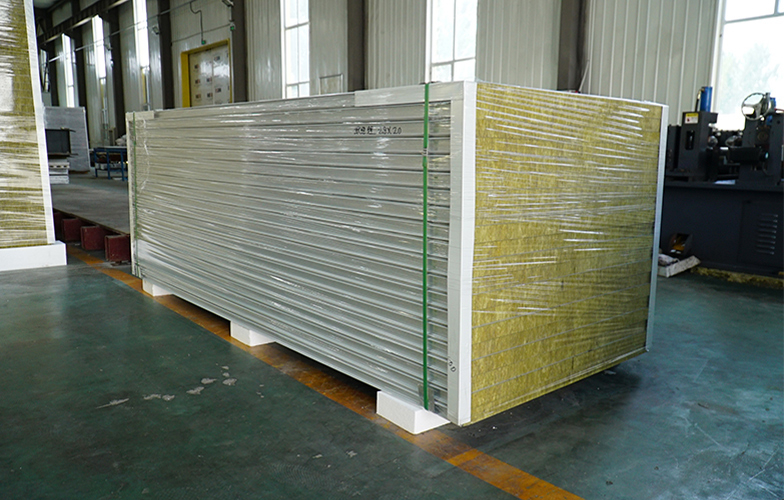
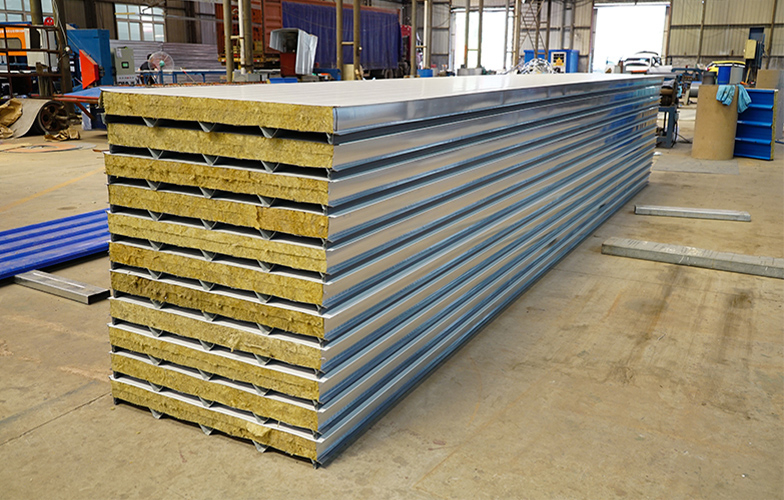
When projects involve continuous exposure to elevated temperatures or strict fire safety requirements, rock wool sandwich panels are the industry's preferred solution.
Manufactured from mineral fibers produced by melting natural basalt rock, rock wool remains dimensionally stable under extremely high temperatures and provides outstanding fire resistance, sound insulation, and long-term durability.
For factories, power plants, industrial facilities, and fire-rated buildings, rock wool sandwich panels are generally considered the most suitable option for high-temperature applications.
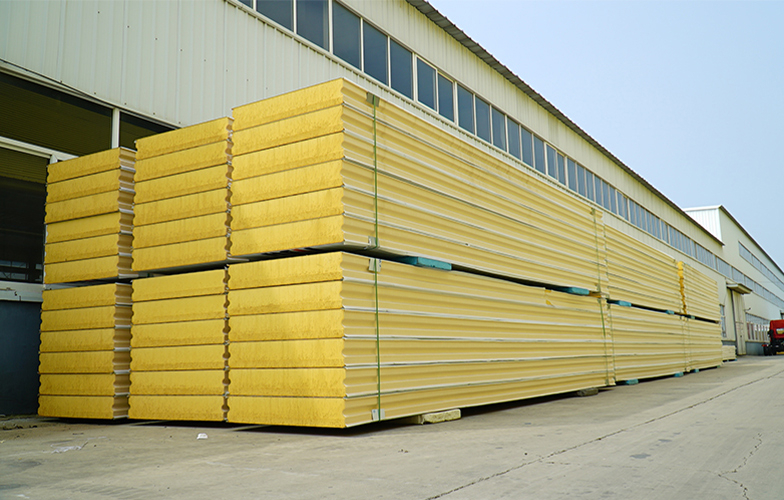
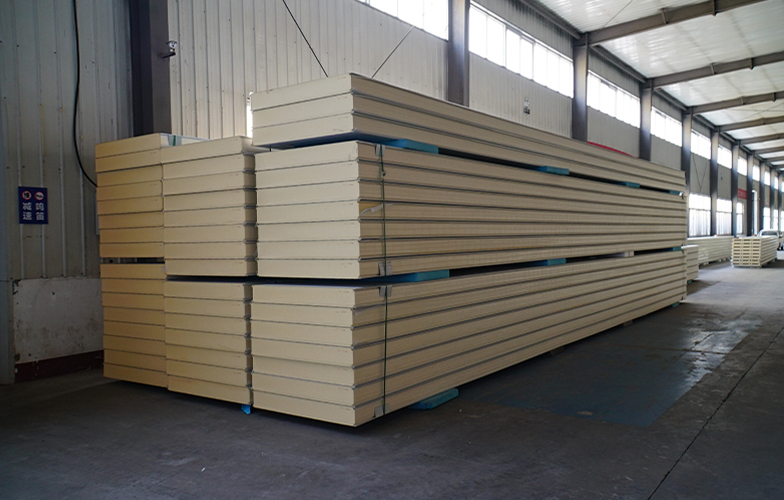
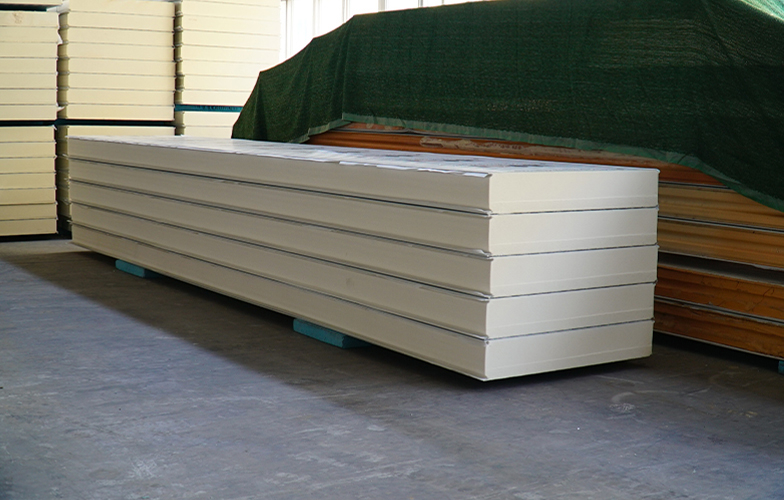
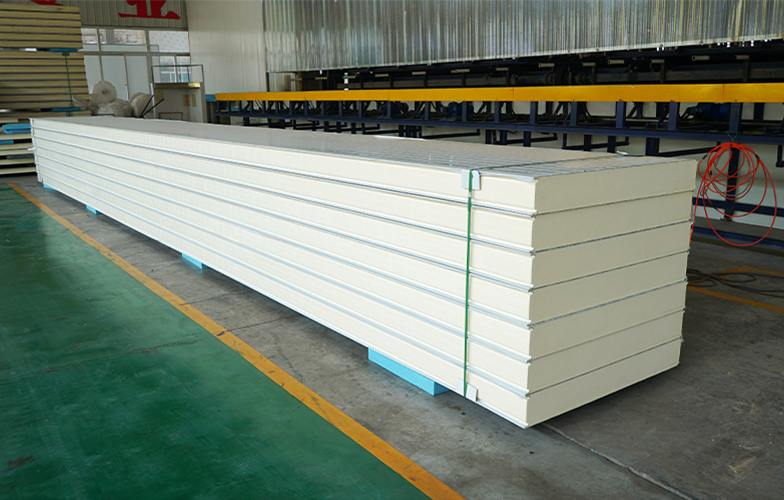
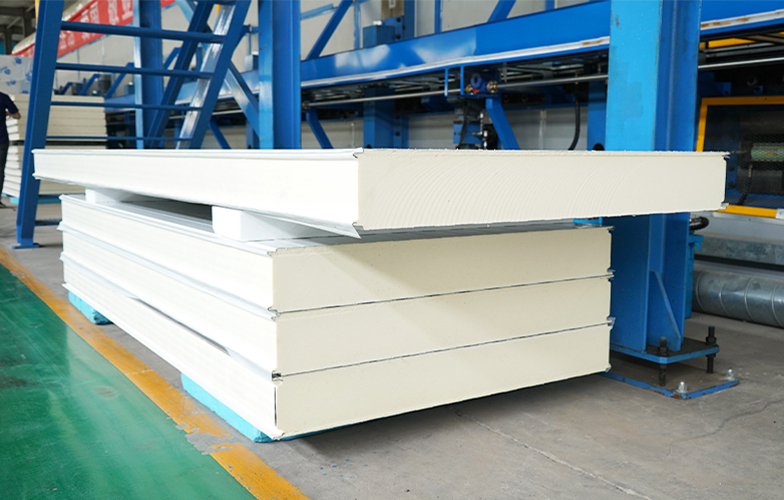
Product Structure of Sandwich Panels
To better understand are sandwich panels used in high temperatures, it is important to examine how a sandwich panel is constructed. Each component contributes to its overall mechanical strength, thermal efficiency, and long-term durability.
A standard sandwich panel consists of three bonded layers:
Outer Steel Facing: Pre-painted galvanized steel, galvanized steel, aluminum-zinc coated steel, or stainless steel, providing structural strength, corrosion resistance, and weather protection.
Insulation Core: Polyurethane (PU), polyisocyanurate (PIR), or rock wool, which determines the panel's thermal insulation, fire resistance, and temperature tolerance.
Inner Steel Facing: Protects the insulation core while enhancing rigidity and providing an attractive interior finish.
These layers are permanently bonded using continuous lamination technology, forming a lightweight yet highly rigid composite panel capable of withstanding mechanical loads while minimizing heat transfer.
Manufacturing Process Ensures Stable Performance
The manufacturing quality directly affects whether sandwich panels are used in high temperatures successfully over many years.
A modern continuous production line generally includes the following steps:
Raw Material Preparation
High-quality steel coils are inspected for thickness, coating weight, surface finish, and dimensional accuracy before entering production.
The insulation materials are carefully formulated to achieve the desired density, thermal conductivity, compressive strength, and fire performance.
Roll Forming
Both steel sheets pass through precision roll-forming machines that create the required surface profile. Different profiles improve rigidity, aesthetics, and installation performance.
Core Filling and Lamination
Depending on the insulation type:
PU and PIR panels are produced by injecting liquid chemicals that expand uniformly between the steel sheets.
Rock wool panels use high-density mineral wool slabs precisely positioned before lamination.
Advanced automated production lines ensure consistent bonding strength across the entire panel.
Continuous Curing
The laminated panel passes through a controlled curing section where pressure and temperature ensure complete adhesion between the insulation core and steel facings.
Cutting and Quality Inspection
Finished panels are cut to custom lengths and undergo rigorous quality inspections, including:
Panel thickness verification
Bond strength testing
Thermal conductivity testing
Density measurement
Fire resistance evaluation
Surface quality inspection
Dimensional tolerance control
Strict manufacturing standards significantly improve long-term thermal stability in demanding environments.
Technical Parameters for High-Temperature Applications
International buyers evaluating whether sandwich panels are used in high temperatures should pay close attention to technical specifications rather than price alone.
Typical performance values include:
| Parameter | PU Panel | PIR Panel | Rock Wool Panel |
|---|---|---|---|
| Thermal Conductivity | ≤0.024 W/m·K | ≤0.022 W/m·K | 0.035–0.045 W/m·K |
| Density | 40–45 kg/m³ | 40–45 kg/m³ | 100–150 kg/m³ |
| Fire Rating | B1 (optional) | B-s1,d0 / B1 | A1 Non-combustible |
| Continuous Service Temperature | -50°C to +80°C | -50°C to +120°C | Up to 600°C or higher |
| Water Absorption | Very Low | Very Low | Low |
| Sound Insulation | Good | Good | Excellent |
| Mechanical Strength | High | High | High |
These values may vary depending on raw materials, manufacturing technology, and local certification requirements.
Thermal Performance Comparison
When buyers ask are sandwich panels used in high temperatures, selecting the appropriate insulation core is the most important decision.
PU Sandwich Panels
PU sandwich panels provide exceptional thermal insulation due to their closed-cell foam structure. Their low thermal conductivity helps reduce cooling and heating energy consumption, making them an excellent choice for:
Cold storage facilities
Commercial warehouses
Office buildings
Logistics centers
Agricultural buildings
Prefabricated houses
However, for applications involving prolonged exposure to high industrial temperatures, PU panels should be selected carefully within their recommended service temperature range.
PIR Sandwich Panels
PIR insulation features a modified polymer structure that offers improved thermal stability compared with conventional PU foam.
Advantages include:
Better fire performance
Lower smoke generation
Improved dimensional stability
Higher continuous operating temperature
Enhanced building safety
PIR panels are increasingly specified for commercial roofing systems, industrial buildings, and projects requiring stricter fire regulations.
Rock Wool Sandwich Panels
For demanding thermal environments, rock wool remains the preferred solution.
Its mineral fiber composition provides:
Outstanding fire resistance
High melting temperature
Excellent acoustic insulation
Minimal thermal deformation
Long service life
Stable performance under continuous heat exposure
This makes rock wool sandwich panels ideal for factories, power stations, petrochemical facilities, airports, hospitals, and public buildings where both fire safety and heat resistance are critical.
Typical High-Temperature Applications
The question are sandwich panels used in high temperatures can be answered confidently by examining their widespread industrial use.
High-performance sandwich panels are commonly installed in:
Industrial Manufacturing Plants
Production facilities often experience elevated ambient temperatures due to machinery, furnaces, and manufacturing equipment. Properly selected sandwich panels help maintain indoor climate stability while reducing HVAC energy consumption.
Food Processing Facilities
Commercial bakeries, dairy plants, beverage factories, and food production lines require hygienic wall systems capable of handling varying temperatures while maintaining insulation performance.
Pharmaceutical and Cleanroom Buildings
Controlled production environments require stable temperatures and clean interior surfaces. Sandwich panels offer smooth finishes, excellent insulation, and easy maintenance.
Cold Storage Combined with Hot Outdoor Climates
Many logistics warehouses operate in regions where outdoor temperatures exceed 45°C during summer. High-quality insulated sandwich panels minimize heat gain and reduce refrigeration costs.
Metal Processing and Equipment Workshops
Industrial workshops benefit from roof and wall systems that withstand solar heat while improving worker comfort and reducing cooling loads.
International Buyers' Purchasing Preferences and Pain Points
Global buyers evaluating whether sandwich panels are used in high temperatures generally focus on more than thermal performance alone.
The most common purchasing considerations include:
Verified fire-resistance certifications (EN 13501, ASTM, FM Approved, or equivalent)
Stable thermal conductivity over the product's service life
High bonding strength between steel facings and insulation core
Corrosion-resistant steel coatings suitable for local climates
Availability of customized thicknesses and panel profiles
Consistent manufacturing quality across large production batches
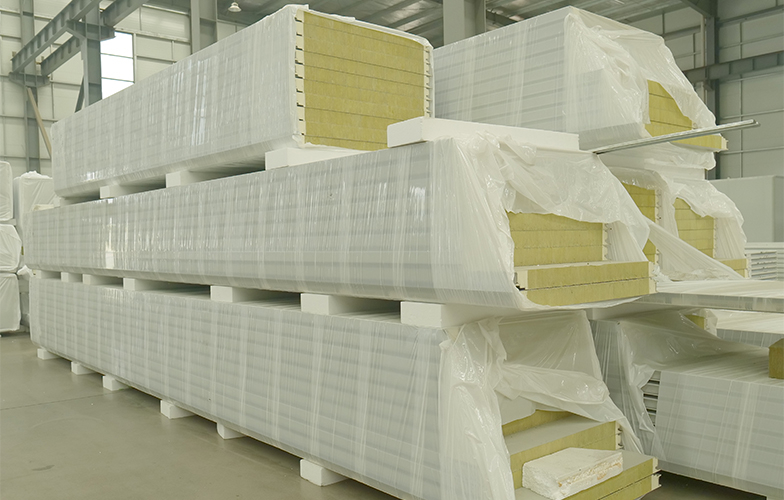
Reliable packaging to prevent transportation damage
Technical support for installation and project design
Competitive lead times for international shipments
Manufacturer experience with export projects and compliance documentation
Suppliers that provide certified testing reports, engineering support, and customized production solutions are generally preferred by distributors, contractors, and project developers seeking long-term reliability rather than the lowest initial cost.
Future Market Trends for High-Performance Sandwich Panels
As global construction standards continue to evolve, demand for high-performance insulated building materials is expected to grow steadily. Governments, developers, and industrial investors are placing greater emphasis on energy efficiency, fire safety, and sustainable construction, making advanced sandwich panels an increasingly attractive solution.
Several market trends are shaping future demand:
Higher Fire Safety Requirements
Building regulations in many countries are becoming more stringent, particularly for industrial facilities, warehouses, public buildings, and high-occupancy structures. This is driving greater adoption of PIR and rock wool sandwich panels, which offer improved fire performance compared with conventional insulation materials.
Growth of Prefabricated Construction
The rapid expansion of modular construction and prefabricated buildings is increasing demand for lightweight, factory-manufactured wall and roof systems that can be installed quickly while maintaining excellent thermal insulation.
Focus on Energy Efficiency
Rising energy costs continue to encourage developers to invest in building envelopes with lower thermal conductivity. High-quality sandwich panels help reduce heating and cooling expenses while supporting green building certifications.
Increased Demand for Customized Solutions
International buyers increasingly require customized panel thicknesses, steel coatings, colors, joint systems, and fire ratings to meet local building codes and project specifications. Manufacturers with flexible production capabilities are better positioned to serve these diverse market needs.
How to Choose the Right Sandwich Panel for High-Temperature Applications
If you are evaluating are sandwich panels used in high temperatures for your project, selecting the appropriate panel should involve more than comparing prices.
Consider the following factors before placing an order:
Evaluate the Operating Temperature
Determine the maximum continuous temperature your building or process environment will experience. Standard PU panels are suitable for many commercial applications, while PIR or rock wool panels are better choices for higher-temperature conditions.
Review Fire Performance Requirements
Check local building regulations and project specifications. Industrial facilities, public buildings, and critical infrastructure often require higher fire-resistance ratings, making rock wool or certified PIR panels the preferred option.
Verify Technical Certifications
Request documentation such as:
Fire test reports (EN 13501, ASTM, FM Approved, or equivalent)
Thermal conductivity test reports
Mechanical strength data
Factory quality certifications
Material safety documentation
Third-party certification helps ensure consistent product performance and regulatory compliance.
Assess Environmental Conditions
Projects located in coastal regions, humid climates, or areas with strong UV exposure may require enhanced corrosion-resistant steel coatings and protective finishes to maximize service life.
Choose an Experienced Manufacturer
Reliable suppliers provide more than just products. They also offer engineering support, customized production, installation guidance, export packaging, and responsive after-sales service. Working with an experienced manufacturer can reduce project risks and improve long-term value.
Conclusion
So, are sandwich panels used in high temperatures? The answer is yes—provided the correct panel type is selected for the intended operating environment.
PU sandwich panels deliver excellent thermal insulation for most commercial and industrial buildings where moderate service temperatures are expected. PIR sandwich panels provide improved thermal stability and enhanced fire performance, making them suitable for projects with stricter safety requirements. For applications involving continuous exposure to elevated temperatures or demanding fire-resistance standards, rock wool sandwich panels remain the preferred solution due to their non-combustible mineral composition and outstanding thermal stability.
For international buyers, choosing the right sandwich panel should involve evaluating insulation performance, fire resistance, certification, manufacturing quality, and supplier expertise rather than focusing solely on purchase price. A well-designed sandwich panel system can reduce energy consumption, improve building safety, extend service life, and lower maintenance costs throughout the project lifecycle.
Frequently Asked Questions
1. Can PU sandwich panels be used in high-temperature environments?
Yes. PU sandwich panels perform well in many commercial and industrial applications with continuous service temperatures typically up to approximately 80°C. For environments exceeding this range, PIR or rock wool panels are generally more appropriate.
2. Which sandwich panel offers the best fire resistance?
Rock wool sandwich panels provide the highest level of fire resistance because their mineral fiber core is non-combustible and can withstand extremely high temperatures. They are widely used in industrial buildings, public facilities, and projects with strict fire safety requirements.
3. How do I choose the correct panel thickness?
Panel thickness depends on climate conditions, energy-efficiency targets, building type, and local regulations. Common options range from 50 mm to 200 mm, with thicker panels providing improved thermal insulation for demanding environments.
4. What information should I request from a sandwich panel supplier?
Professional buyers should request product specifications, thermal conductivity data, fire test reports, structural performance data, coating specifications, quality certifications, installation guidance, and project references before making a purchasing decision.
Request Professional Support for Your Next Project
Whether you are planning an industrial facility, cold storage warehouse, modular building, commercial factory, or high-performance roofing system, selecting the right sandwich panel is essential for long-term performance.
Our engineering team provides customized sandwich panel solutions tailored to your project requirements, including panel selection, technical consultation, structural recommendations, and export support.
Contact us today to receive:
A competitive quotation based on your project specifications
Detailed technical datasheets and product certifications
Free samples for material evaluation
Professional engineering and installation recommendations
Customized OEM and ODM manufacturing solutions for global distributors and contractors
Partner with an experienced manufacturer to achieve reliable thermal insulation, superior building performance, and long-term value for your construction projects.